5 ‘Treatments’ Used in 19th Century Asylums (And Why They Weren’t Really Treatment at All)

The word treatment suggests care, healing, and compassion.

But inside many 19th century asylums, the reality was something very different.

What was labeled as “treatment” was often rooted in misunderstanding, control, and, at times, quiet cruelty. Many patients—especially women—were subjected to methods that did little to help and often caused far more harm than good.

Here are five commonly used “treatments” that reveal the disturbing truth behind asylum walls.


1. Isolation

Patients were frequently placed in solitary confinement for extended periods of time.

The intention was to calm the mind, but in reality, isolation often deepened fear, confusion, and emotional distress. Being cut off from all human contact could break even the strongest spirit.


2. Restraints

Straightjackets, straps, and confinement chairs were used to control behavior.

While sometimes presented as a safety measure, restraints were often overused. Patients could be left immobilized for hours—or longer—without relief.


3. Forced Bathing

In some institutions, patients were subjected to prolonged cold or hot baths.

These were believed to “shock” the system into stability. Instead, they often caused physical discomfort, fear, and further trauma.


4. Sedation and Chemical Restraint

Various substances were used to quiet patients.

Rather than addressing the root of a person’s distress, these methods simply suppressed behavior—leaving patients disconnected and often unable to advocate for themselves.


5. Moral Control

Perhaps the most overlooked “treatment” was control over behavior, expression, and independence.

Women, in particular, could be institutionalized for actions that challenged social norms—grief, defiance, or even simply being “too emotional.” Treatment, in these cases, became a means of enforcing obedience rather than providing care.


💭 The Truth Behind the Word “Treatment”

Looking back, it becomes clear that many of these practices were less about healing and more about control.

They reflect a time when mental health was deeply misunderstood—and when those who suffered were often silenced rather than supported.


📖 A Story Inspired by These Forgotten Voices

If these realities stir something in you, you are not alone.

Delusional Madness is a novel inspired by the real experiences of those who lived behind asylum walls—particularly the women whose voices were dismissed, ignored, or erased.

It is a story of injustice, survival, and the quiet strength of those who endured what they never should have had to.

👉 Read more about Delusional Madness at the link below:

https://www.amazon.com/dp/B0F9PVZ9LC

Books Like Delusional Madness (If You Love Dark Historical Fiction)

If you are drawn to dark, atmospheric historical fiction—stories that explore hidden truths, psychological tension, and the lives of women shaped by the constraints of their time—you are not alone. These types of stories linger long after the final page, offering both haunting narratives and powerful reflections on history.

If you enjoyed Delusional Madness, or are looking for books with similar themes, here are several compelling reads that capture the same sense of unease, resilience, and historical depth.


📚 Alias Grace by Alias Grace

Set in 19th-century Canada, this novel follows Grace Marks, a young woman convicted of murder. As a doctor attempts to uncover the truth behind her story, questions of memory, perception, and identity begin to blur. Like Delusional Madness, this novel explores the fragile line between truth and interpretation, particularly in the lives of women whose voices are often dismissed.


📚 The Silent Companions by The Silent Companions

A gothic tale filled with dread and psychological tension, this story centers on a woman sent to live in a decaying country estate after her husband’s death. As strange occurrences begin to unfold, the atmosphere becomes increasingly unsettling. Readers who appreciate the eerie, immersive tone of Delusional Madness will find much to love here.


📚 The Woman in White by The Woman in White

A classic of Victorian literature, this novel weaves together mystery, identity, and wrongful confinement. With its themes of control and the vulnerability of women within rigid societal systems, it shares strong thematic connections with Delusional Madness.


📚 The Madwoman Upstairs by The Madwoman Upstairs

Blending literary history with a modern perspective, this novel explores the legacy of the Brontë sisters and the concept of the “madwoman” in literature. It offers an interesting reflection on how women’s emotions and behaviors have been interpreted—and often misunderstood—across time.


📚 Delusional Madness by Kimberly K. Taylor

If you are especially interested in stories rooted in the historical realities of 19th-century asylums, Delusional Madness offers a deeply immersive look into the experiences of women who were confined not for madness, but for being inconvenient.

Set in Ohio in the 1890s, the novel follows Cassie Alexander as she navigates a world where power is disguised as care and silence is enforced as treatment. Inspired by real historical practices, the story explores themes of injustice, resilience, and the struggle to be heard in a system designed to suppress.


💭 Final Thoughts

Dark historical fiction offers more than just compelling storytelling—it provides a window into the realities of the past, encouraging readers to reflect on how far we’ve come and how far we still have to go.

Whether you are drawn to psychological tension, gothic atmosphere, or stories of women navigating unjust systems, these books offer unforgettable reading experiences.

Why Women Were Institutionalized in the 1800s (And How Easily It Happened)

In the 19th century, the rise of asylums was often seen as a progressive step in the treatment of mental illness. These institutions were presented as places of care, designed to remove individuals from the chaos of everyday life and provide structured environments for healing. For many women, however, the reality was far more troubling—and far more unjust.

Institutionalization did not always require clear evidence of severe mental illness. In fact, the criteria for committing a woman could be alarmingly vague. Behaviors that challenged social expectations were often interpreted as signs of instability. A woman who spoke too freely, expressed strong emotions, or resisted authority could quickly find herself labeled as “hysterical” or “unfit.”

Marriage played a significant role in this system. In many cases, husbands had the legal authority to commit their wives to an asylum. A woman’s voice carried little weight against the claims of her spouse, and once committed, she had very few avenues to contest her confinement. Disagreements, perceived disobedience, or even personal conflicts could escalate into institutionalization with little oversight.

Grief and emotional distress were also frequently misunderstood. Women experiencing postpartum depression, loss, or prolonged sadness were often treated as though they were suffering from dangerous mental instability. Rather than receiving compassion or support, they were removed from their homes and placed into institutions where their condition often worsened.

Even something as simple as nonconformity could be enough. Women who rejected traditional roles, pursued independence, or behaved in ways that did not align with societal expectations were at risk. In a time when obedience and modesty were highly valued, deviation could be pathologized and punished.

Once inside an asylum, proving one’s sanity was extraordinarily difficult. The very act of insisting one was not ill could be interpreted as further evidence of instability. This created a system in which women could become trapped, their voices dismissed and their identities reduced to diagnoses they could not escape.

What makes this history particularly unsettling is not only the conditions within these institutions, but how easily women could be placed there in the first place. The lack of oversight, combined with societal attitudes toward women, created an environment where control could be disguised as care.

Despite this, many women endured with quiet resilience. They formed connections, preserved fragments of their identity, and, when possible, resisted in the only ways they could. Their stories, though often lost or overlooked, remain an important reminder of the consequences of silencing voices and misusing authority.

This historical reality serves as the foundation for Delusional Madness, a novel inspired by the experiences of women who were confined not for madness, but for being inconvenient. Through fiction grounded in research, the story seeks to bring attention to a past that should not be forgotten.

This history inspired Delusional Madness, a novel exploring the emotional and psychological impact of wrongful confinement in a 19th-century asylum.

If you’re interested in stories inspired by this history, you may also enjoy this list of recommended reads:
👉 https://authorkimberlyktaylor.com/2026/03/28/books-like-delusional-madness-if-you-love-dark-historical-fiction/

You can also explore more about what life was like inside these institutions here:
👉 https://authorkimberlyktaylor.com/2026/03/27/what-life-was-really-like-for-women-in-19th-century-asylums/

This reality served as inspiration for Delusional Madness, a novel exploring the emotional and psychological impact of wrongful confinement in a 19th-century asylum.

Learn more here: Amazon.com: Delusional Madness: 9798280147171: Taylor, Kimberly K, Nowlin, Emma: Books

What Life Was Really Like for Women in 19th Century Asylums

In the late 19th century, asylums were often presented as places of care, healing, and refuge. To the outside world, they stood as symbols of progress in the treatment of mental illness. Behind their doors, however, a very different reality existed—one that many women would never escape.

For countless women, confinement in an asylum was not always the result of severe mental illness. In many cases, women were committed for reasons that today would be considered unjust or even unthinkable. Grief, postpartum depression, defiance, or simply failing to conform to societal expectations could all lead to institutionalization. A woman’s voice could be dismissed as hysteria, her emotions labeled as instability, and her independence interpreted as disorder.

Once admitted, patients often lost control over nearly every aspect of their lives. Personal belongings were taken. Names were replaced with diagnoses. Communication with the outside world was limited or entirely restricted. For many, the loss of identity became as damaging as any condition they were said to suffer from.

Treatment within these institutions varied, but many so-called methods of care were harsh, ineffective, or deeply questionable. Women were subjected to prolonged isolation, physical restraints, forced routines, and other purported treatments that prioritized control over compassion. Silence was often enforced, and resistance could result in punishment rather than understanding.

What makes this history particularly unsettling is not just the conditions within the asylums, but the ease with which women could be placed there. In many instances, husbands or family members had the authority to commit a woman, sometimes with little evidence and minimal oversight. Once inside, proving one’s sanity was nearly impossible.

Despite these conditions, stories of resilience emerged. Women formed quiet alliances, offered one another comfort, and found small ways to preserve their sense of self. Their strength, though often unseen and unrecorded, remains an important part of this history.

Today, as we reflect on this period, it is essential to remember these women—not as forgotten figures in a distant past, but as individuals whose voices were silenced and whose experiences still echo into the present.

This historical reality served as the inspiration for Delusional Madness, a novel that explores the emotional and psychological impact of wrongful confinement within a 19th-century asylum. Through fiction grounded in research, the story seeks to shed light on a past that should not be forgotten.

If you’re interested in stories inspired by this history, you may also enjoy this list of recommended reads:
👉https://authorkimberlyktaylor.com/2026/03/28/books-like-delusional-madness-if-you-love-dark-historical-fiction/

This reality served as inspiration for Delusional Madness, a novel exploring the emotional and psychological impact of wrongful confinement in a 19th-century asylum.

If you’re interested in stories inspired by this history, you can learn more about Delusional Madness here: Amazon.com: Delusional Madness: 9798280147171: Taylor, Kimberly K, Nowlin, Emma: Books

Famous Asylums of the 19th Century

Blackwell’s Island Asylum (New York)

The Blackwell’s Island Lunatic Asylum gained national attention when journalist Nellie Bly went undercover there in 1887. Her experience inside the institution was later published in Ten Days in a Mad-House, exposing overcrowding and poor conditions and sparking widespread calls for reform.

Trans-Allegheny Lunatic Asylum (West Virginia)

This enormous stone structure began construction in 1858 and followed the Kirkbride Plan, an architectural design meant to provide patients with sunlight, ventilation, and calm surroundings believed to aid recovery. The building eventually became one of the largest hand-cut stone structures in the United States. Today it operates as a historic site and museum where visitors can tour the wards and corridors.

Trans-Allegheny Lunatic Asylum in Weston, West Virginia — one of the largest hand-cut stone buildings in the United States.

Danvers State Hospital (Massachusetts)

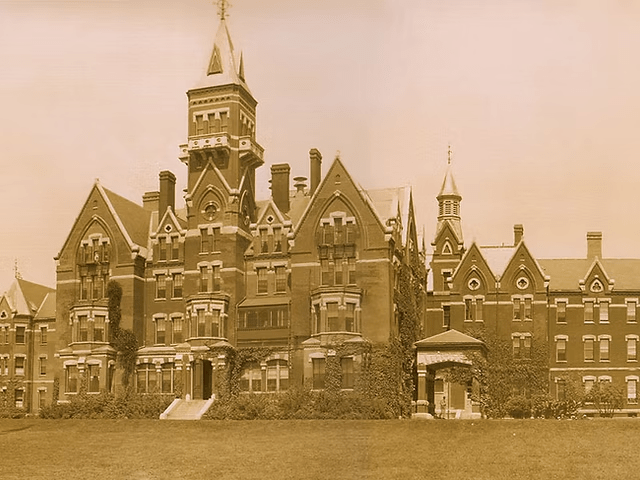
Opened in 1878, Danvers State Hospital became one of the most recognizable asylum buildings in the United States due to its dramatic Gothic-style architecture. Built using the Kirkbride design, the hospital was intended to create a therapeutic environment with large windows and open grounds. Over time, however, overcrowding changed the conditions inside the facility.

Athens Lunatic Asylum (Ohio)

Opened in 1874, the Athens Lunatic Asylum served southeastern Ohio for more than a century. The hospital later became known as The Ridges and today is part of Ohio University. The large brick Kirkbride building remains one of the most recognizable historical structures connected to mental health care in the region.


Famous Asylums of the 19th Century

During the 19th century, mental institutions were built across the United States and Europe as part of a growing movement to treat mental illness in specialized facilities. While some institutions attempted to follow progressive ideals of care, many became overcrowded as patient populations increased.

Several of these institutions became especially well known due to their size, architecture, or the historical stories associated with them.


Construction of the Trans-Allegheny Lunatic Asylum began in 1858 and continued for many years, eventually creating one of the largest hand-cut stone buildings in North America. Designed following the Kirkbride Plan, the hospital was intended to provide patients with fresh air, sunlight, and structured daily routines believed to promote recovery.

Originally built to house about 250 patients, the institution eventually held well over 2,000 residents at its peak in the mid-20th century. Today, the building is preserved as a historic site where visitors can tour the wards and learn about the complex history of mental health treatment in the United States.

During my own visits to the Trans-Allegheny Lunatic Asylum, the sheer size of the building and the long corridors lined with patient rooms made the history feel incredibly real. Standing inside those spaces makes it easier to imagine the lives of the people who once lived there.


Opened in 1878, Danvers State Hospital was another large institution designed using the Kirkbride architectural model. Its striking Gothic-style structure quickly became one of the most recognizable asylum buildings in America.

Like many institutions of its time, Danvers was originally created with therapeutic intentions. Over time, however, overcrowding and evolving medical practices dramatically changed the conditions within the hospital. The building became widely known in American cultural history and later gained a reputation as one of the most iconic abandoned asylums before its redevelopment in the early 2000s.


Located on what is now Roosevelt Island in New York City, the Blackwell’s Island Lunatic Asylum opened in the mid-19th century to house patients from the growing city population. The institution gained national attention after journalist Nellie Bly famously went undercover there in 1887.

Her experience inside the institution was later published in Ten Days in a Mad-House, which exposed severe overcrowding and mistreatment of patients. Her reporting helped spark public outrage and led to reforms in the oversight of mental institutions.


Opened in 1874, the Athens Lunatic Asylum—later known as The Ridges—served as the main psychiatric hospital for southeastern Ohio for more than a century. Like many institutions of the era, it followed the Kirkbride architectural model designed to maximize sunlight and fresh air for patients.

The hospital operated until the late 20th century and is now part of the campus of Ohio University. The historic buildings remain a powerful reminder of the evolution of mental health treatment in the United States.


Why These Institutions Still Fascinate Us

Historic asylums continue to capture public interest because they represent an important and often misunderstood chapter in medical history. They remind us how society once approached mental illness and how dramatically those attitudes have changed.

For writers and historians, these places also hold countless human stories—stories of patients, doctors, families, and communities shaped by the institutions that once stood at the center of mental health care.

Research into institutions like these helped inspire the historical setting of Delusional Madness, a novel that explores the lives of women confined within a 19th-century asylum.

How Were Patients Treated in Victorian Asylums?

Not all patients in Victorian asylums were treated with cruelty—but for many, the reality was far more unsettling than the promise of care and healing.

During the Victorian era, mental asylums were established with the goal of providing treatment and care for individuals suffering from mental illness. Reformers in the early 19th century believed that structured routines, calm surroundings, and compassionate supervision could help restore mental stability.

However, the reality inside many Victorian asylums was often far more complicated.

While some institutions attempted to follow progressive ideals, overcrowding, limited funding, and evolving medical theories frequently shaped how patients were treated.

Understanding these conditions helps shed light on an important chapter in the history of mental health care.


The Idea of “Moral Treatment”

In the early years of asylum reform, physicians promoted a philosophy known as moral treatment. This approach emphasized kindness, order, and a peaceful environment rather than punishment.

Patients were often encouraged to participate in daily activities such as:

  • gardening
  • reading
  • sewing or crafts
  • walking the grounds
  • attending religious services

Doctors believed that maintaining routine and calm surroundings could help stabilize a patient’s mind.

In some institutions, this approach did provide a more humane alternative to earlier methods of confinement.


Life Inside the Wards

As asylum populations grew during the Victorian period, many institutions struggled to maintain the ideals of moral treatment.

Facilities designed for a few hundred patients sometimes housed far more than intended. Overcrowded wards, limited staff, and strict schedules became common features of daily life.

Patients often followed rigid routines that governed when they woke, ate meals, worked, and slept.

For some individuals, the institutional structure could feel orderly and predictable. For others, it could feel restrictive and isolating.

For many, these routines did not bring comfort—they reinforced a sense of powerlessness, where even the smallest decisions were no longer their own.


Medical Treatments Used at the Time

Victorian physicians were still trying to understand the causes of mental illness, and medical treatments varied widely.

Some of the treatments used during this period included:

  • prolonged rest or bed confinement
  • cold or warm baths
  • dietary regulation
  • occupational therapy through work or crafts
  • periods of isolation for disruptive behavior

While doctors believed many of these treatments could help patients recover, modern medicine recognizes that many mental health conditions require far different approaches.


Restraint and Control

In some institutions, mechanical restraints such as straitjackets or restraint chairs were used to manage patients who were considered dangerous or uncontrollable.

By the mid-19th century, many reformers began advocating for non-restraint policies, arguing that patients should be managed through observation and calm supervision rather than physical restraint.

Some hospitals successfully implemented these reforms, while others struggled to maintain them as patient populations increased.


Investigations That Revealed Asylum Conditions

Public understanding of Victorian asylums changed dramatically when journalists and reformers began documenting what was happening inside these institutions.

One of the most famous investigations was conducted by Nellie Bly, who went undercover in a New York asylum. Her experience was later published in the book Ten Days in a Mad-House.

Her reporting exposed overcrowding, neglect, and harsh conditions, helping spark public debate and calls for reform.


The Human Stories Behind Asylum Walls

Behind the statistics and reports were thousands of individuals whose lives unfolded inside these institutions.

Some patients struggled with severe mental illness and sought treatment or refuge. Others were confined because of misunderstandings about mental health, social pressures, or family disputes.

These personal stories continue to fascinate historians and writers because they reveal how society once understood mental illness—and how those beliefs shaped the lives of countless individuals.


Historical Fiction Inspired by Asylum History

The complex realities of Victorian mental institutions inspired the historical novel Delusional Madness by Kimberly K. Taylor, which explores the emotional and psychological impact of wrongful confinement in a 19th-century asylum.

Set in the late nineteenth century, the novel follows the experiences of women confined within an institution where power often masked itself as care, and where silence was enforced rather than compassion offered.

Through the voices of the women inside the institution, the story reflects many of the historical questions surrounding life in Victorian asylums.

To better understand why women were placed in these institutions, you can explore:
👉 https://authorkimberlyktaylor.com/2026/03/27/why-women-were-institutionalized-in-the-1800s-and-how-easily-it-happened/

You may also be interested in what daily life was like inside these asylums:
👉https://authorkimberlyktaylor.com/2026/03/27/what-life-was-really-like-for-women-in-19th-century-asylums/
What Were Insane Asylums Really Like in the 1800s?

What Were Insane Asylums Really Like in the 1800s?

During the 19th century, insane asylums were created with the hope of providing care and treatment for individuals suffering from mental illness. Reformers of the time believed that peaceful environments, routine, and moral guidance could help patients recover.

While some institutions attempted to follow these ideals, historical records reveal that conditions inside many asylums varied dramatically. Overcrowding, limited funding, and evolving medical theories often shaped the experiences of those who lived behind their walls.

Understanding what these institutions were truly like helps illuminate an important chapter in the history of mental health care.


The Original Vision of Asylums

Early mental health reformers believed that removing individuals from stressful environments and placing them in calm surroundings could help restore their mental stability.

Many early asylums were built in rural locations surrounded by open land. Patients were encouraged to participate in daily routines such as gardening, walking, reading, and crafts. This approach was known as moral treatment, and it was widely seen as progressive for its time.

However, as populations grew, many institutions struggled to maintain these ideals.


Overcrowding and Limited Resources

By the late 1800s, many asylums had become severely overcrowded. Facilities designed to house a few hundred patients sometimes held several times that number.

With limited staff and resources, it became increasingly difficult to provide individualized care. Patients were often grouped together in large wards, and daily life became more institutionalized and rigid.


Treatments Used in the 19th Century

Medical understanding of mental illness was still developing during this time. Physicians experimented with a wide range of treatments, some of which are now viewed as ineffective or harmful.

These could include:

  • prolonged bed rest
  • cold water baths
  • isolation or restraint
  • strict behavioral routines

While some doctors believed these methods were therapeutic, others began to question their effectiveness.


Investigations and Public Awareness

Public awareness of conditions inside asylums increased dramatically after investigative journalists began exposing problems within these institutions.

One of the most famous examples is Ten Days in a Mad-House by Nellie Bly. Bly famously pretended to be mentally ill in order to gain admission to an asylum in New York. Her reporting revealed disturbing conditions and helped spark public discussions about reform.


The Human Stories Behind the Walls

Beyond the statistics and historical reports were thousands of individual lives. Some patients genuinely struggled with severe mental illness, while others were institutionalized for reasons that modern society would view very differently.

These stories continue to fascinate historians and writers because they reveal how society once understood mental health—and how easily labels of “madness” could be applied.


A Historical Novel Inspired by Asylum History

The complex history of mental institutions inspired the historical novel Delusional Madness by Kimberly K. Taylor.

Set in the late nineteenth century, the novel explores the experiences of women confined within an asylum and the fragile boundary between authority, accusation, and sanity.

While fictional, the story draws upon historical research into asylum conditions and the social realities faced by many women during that era.

Top Books About Asylums and the History of Mental Institutions

Throughout the 19th century, mental institutions—often called lunatic asylums—were places of mystery, fear, and controversy. While some were founded with good intentions, historical records reveal that many patients endured harsh conditions, questionable treatments, and long periods of confinement.

Over the years, writers and historians have explored these institutions through investigative journalism, literature, and historical fiction. The following books offer powerful insights into the world behind asylum walls.


1. Ten Days in a Mad-House – by Nellie Bly

Few works have had as much impact on public understanding of asylum conditions as Ten Days in a Mad-House. In 1887, journalist Nellie Bly famously went undercover by pretending to be mentally ill in order to be admitted to the Women’s Lunatic Asylum on Blackwell’s Island.

During her ten days inside, she documented overcrowding, neglect, and mistreatment of patients. Her shocking reports exposed serious problems within the institution and helped bring attention to the treatment of the mentally ill.

Even today, her work remains one of the most influential accounts of asylum life in the nineteenth century.


2. The Yellow Wallpaper – by Charlotte Perkins Gilman

Although technically a short story, The Yellow Wallpaper is one of the most famous literary explorations of women’s mental health during the late 1800s.

The story follows a woman undergoing the “rest cure,” a treatment commonly prescribed to women suffering from depression or emotional distress. As she is isolated from intellectual activity and confined to a room, her mental state deteriorates.

The story remains a powerful critique of the medical attitudes and social expectations imposed on women during that time.


3. Delusional Madness – by Kimberly K. Taylor

Delusional Madness is a historical fiction novel set in the late nineteenth century that explores the experiences of women confined within a mental institution.

Through the eyes of Cassie Alexander, readers are introduced to a world where labels of “madness” could be applied for reasons that had little to do with mental illness. Inside the asylum walls, Cassie encounters women whose stories reveal how fragile the line between sanity and accusation could become.

The novel draws inspiration from documented historical accounts of asylum life and seeks to give voice to those whose stories were often forgotten.


Why Asylum Stories Continue to Matter

The history of mental institutions is complex. While some asylums were founded with the hope of providing care and refuge, historical investigations have shown that many patients suffered under systems that lacked oversight and compassion.

Books that explore this history help modern readers better understand the challenges faced by those who lived during that era. They also remind us how attitudes toward mental health have changed—and how far society has come in recognizing the dignity and humanity of those living with mental illness.


Exploring the History Behind the Fiction

If you are interested in learning more about the real historical background behind these stories, you may also want to explore the article:

“Why Were Women Sent to Asylums in the 1800s?”

This history helps provide deeper context for many of the themes explored in novels like Delusional Madness.

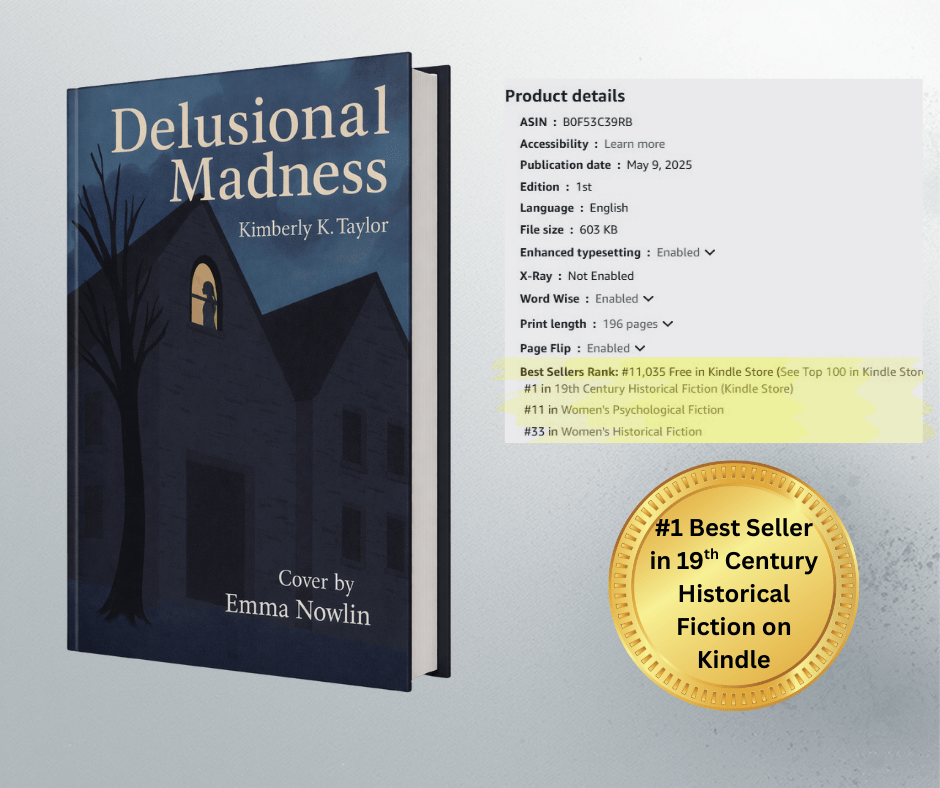
When Delusional Madness Reached #1

There are moments in a writer’s life that feel almost unreal.

During its recent promotional run, Delusional Madness reached #1 in 19th Century Historical Fiction on Kindle.

This story began as research into the forgotten realities of 19th-century asylums. It became a mission to honor the women whose voices were silenced, dismissed, or misunderstood.

Seeing it resonate with readers was overwhelming in the best way.

Thank you to everyone who downloaded, shared, and supported this novel. This milestone belongs to you as much as it does to me.

With gratitude,
Kimberly

The Quiet Work of Advocacy

Advocacy is often imagined as something loud.

It conjures images of raised voices, public statements, and visible confrontation. And sometimes, advocacy does look like that. But more often — and more powerfully — it happens quietly.

In my work as an educator, advocacy has rarely announced itself. It shows up in the moments when a careless comment needs correcting, even if it would be easier to let it pass. It shows up in the decision to protect a student’s dignity when others are quick to label, dismiss, or joke. It lives in the pauses — the moments when silence is tempting, but not neutral.

The students I advocate for do not always have the space or safety to advocate for themselves. Some communicate differently. Some process the world differently. Some have spent years being misunderstood before they ever walk into a classroom. In those moments, advocacy is not about speaking over them — it is about standing beside them.

What has surprised me most is how small these moments can appear from the outside. A quiet redirection. A firm boundary. A reminder that words carry weight. These are not dramatic gestures, but they are not insignificant ones either. They shape how students see themselves. They shape whether a space feels safe or hostile, humane or dismissive.

Advocacy is also about language — the words we choose and the ones we refuse to normalize. Casual cruelty often hides behind humor, habit, or ignorance. Challenging it does not always require anger. Sometimes it requires clarity. Sometimes it requires patience. And sometimes it requires the courage to be the only person in the room who says, “That’s not okay.”

This kind of work does not seek applause. It rarely leaves evidence behind. But it matters.

I’ve come to believe that quiet advocacy is a form of respect — respect for the individual, for their dignity, and for the truth that everyone deserves to exist in a space where they are not reduced to a label or a punchline.

This blog exists, in part, because of that belief.

Some stories demand to be told carefully. Some voices require protection before they can be heard. And some work — the most important work — happens without recognition at all.