Famous Asylums of the 19th Century

Blackwell’s Island Asylum (New York)

The Blackwell’s Island Lunatic Asylum gained national attention when journalist Nellie Bly went undercover there in 1887. Her experience inside the institution was later published in Ten Days in a Mad-House, exposing overcrowding and poor conditions and sparking widespread calls for reform.

Trans-Allegheny Lunatic Asylum (West Virginia)

This enormous stone structure began construction in 1858 and followed the Kirkbride Plan, an architectural design meant to provide patients with sunlight, ventilation, and calm surroundings believed to aid recovery. The building eventually became one of the largest hand-cut stone structures in the United States. Today it operates as a historic site and museum where visitors can tour the wards and corridors.

Trans-Allegheny Lunatic Asylum in Weston, West Virginia — one of the largest hand-cut stone buildings in the United States.

Danvers State Hospital (Massachusetts)

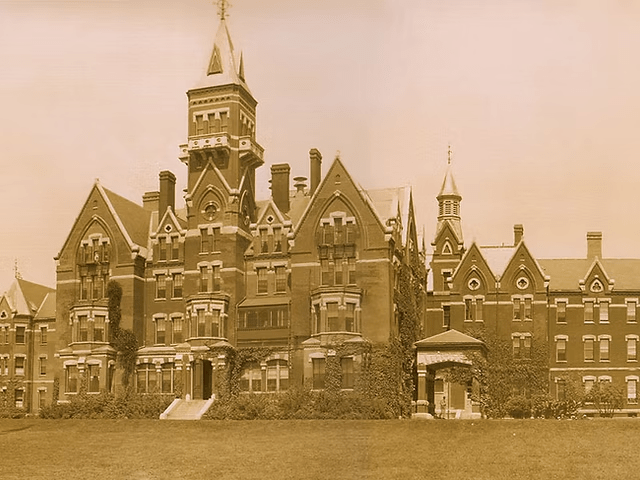
Opened in 1878, Danvers State Hospital became one of the most recognizable asylum buildings in the United States due to its dramatic Gothic-style architecture. Built using the Kirkbride design, the hospital was intended to create a therapeutic environment with large windows and open grounds. Over time, however, overcrowding changed the conditions inside the facility.

Athens Lunatic Asylum (Ohio)

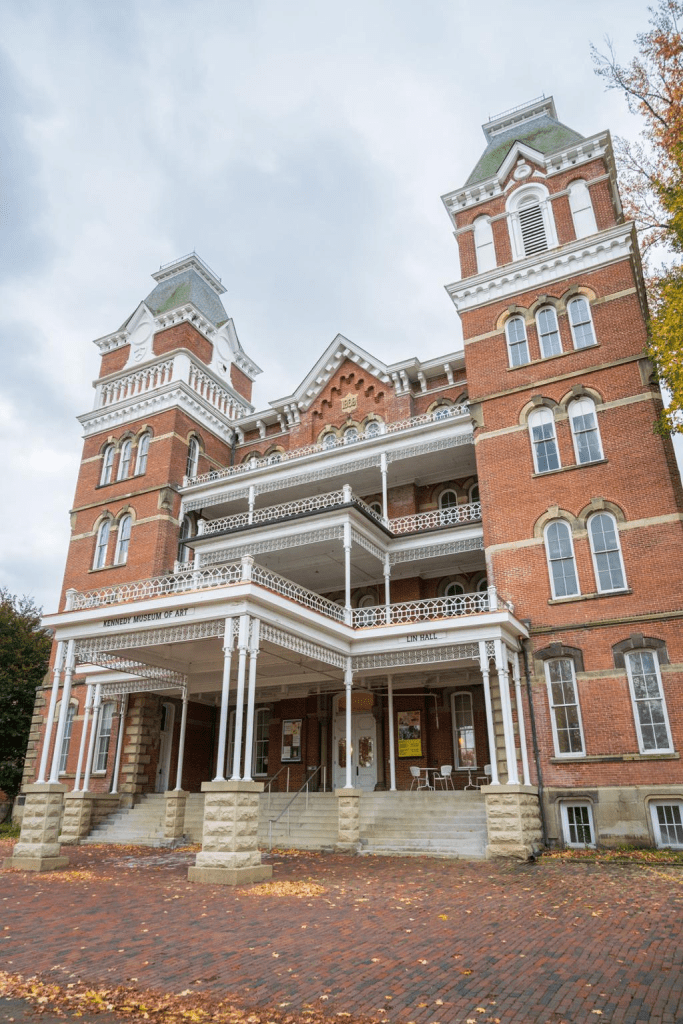
Opened in 1874, the Athens Lunatic Asylum served southeastern Ohio for more than a century. The hospital later became known as The Ridges and today is part of Ohio University. The large brick Kirkbride building remains one of the most recognizable historical structures connected to mental health care in the region.


Famous Asylums of the 19th Century

During the 19th century, mental institutions were built across the United States and Europe as part of a growing movement to treat mental illness in specialized facilities. While some institutions attempted to follow progressive ideals of care, many became overcrowded as patient populations increased.

Several of these institutions became especially well known due to their size, architecture, or the historical stories associated with them.


Construction of the Trans-Allegheny Lunatic Asylum began in 1858 and continued for many years, eventually creating one of the largest hand-cut stone buildings in North America. Designed following the Kirkbride Plan, the hospital was intended to provide patients with fresh air, sunlight, and structured daily routines believed to promote recovery.

Originally built to house about 250 patients, the institution eventually held well over 2,000 residents at its peak in the mid-20th century. Today, the building is preserved as a historic site where visitors can tour the wards and learn about the complex history of mental health treatment in the United States.

During my own visits to the Trans-Allegheny Lunatic Asylum, the sheer size of the building and the long corridors lined with patient rooms made the history feel incredibly real. Standing inside those spaces makes it easier to imagine the lives of the people who once lived there.


Opened in 1878, Danvers State Hospital was another large institution designed using the Kirkbride architectural model. Its striking Gothic-style structure quickly became one of the most recognizable asylum buildings in America.

Like many institutions of its time, Danvers was originally created with therapeutic intentions. Over time, however, overcrowding and evolving medical practices dramatically changed the conditions within the hospital. The building became widely known in American cultural history and later gained a reputation as one of the most iconic abandoned asylums before its redevelopment in the early 2000s.


Located on what is now Roosevelt Island in New York City, the Blackwell’s Island Lunatic Asylum opened in the mid-19th century to house patients from the growing city population. The institution gained national attention after journalist Nellie Bly famously went undercover there in 1887.

Her experience inside the institution was later published in Ten Days in a Mad-House, which exposed severe overcrowding and mistreatment of patients. Her reporting helped spark public outrage and led to reforms in the oversight of mental institutions.


Opened in 1874, the Athens Lunatic Asylum—later known as The Ridges—served as the main psychiatric hospital for southeastern Ohio for more than a century. Like many institutions of the era, it followed the Kirkbride architectural model designed to maximize sunlight and fresh air for patients.

The hospital operated until the late 20th century and is now part of the campus of Ohio University. The historic buildings remain a powerful reminder of the evolution of mental health treatment in the United States.


Why These Institutions Still Fascinate Us

Historic asylums continue to capture public interest because they represent an important and often misunderstood chapter in medical history. They remind us how society once approached mental illness and how dramatically those attitudes have changed.

For writers and historians, these places also hold countless human stories—stories of patients, doctors, families, and communities shaped by the institutions that once stood at the center of mental health care.

Research into institutions like these helped inspire the historical setting of Delusional Madness, a novel that explores the lives of women confined within a 19th-century asylum.

How Were Patients Treated in Victorian Asylums?

During the Victorian era, mental asylums were established with the goal of providing treatment and care for individuals suffering from mental illness. Reformers in the early 19th century believed that structured routines, calm surroundings, and compassionate supervision could help restore mental stability.

However, the reality inside many Victorian asylums was often far more complicated.

While some institutions attempted to follow progressive ideals, overcrowding, limited funding, and evolving medical theories frequently shaped how patients were treated.

Understanding these conditions helps shed light on an important chapter in the history of mental health care.


The Idea of “Moral Treatment”

In the early years of asylum reform, physicians promoted a philosophy known as moral treatment. This approach emphasized kindness, order, and a peaceful environment rather than punishment.

Patients were often encouraged to participate in daily activities such as:

  • gardening
  • reading
  • sewing or crafts
  • walking the grounds
  • attending religious services

Doctors believed that maintaining routine and calm surroundings could help stabilize a patient’s mind.

In some institutions, this approach did provide a more humane alternative to earlier methods of confinement.


Life Inside the Wards

As asylum populations grew during the Victorian period, many institutions struggled to maintain the ideals of moral treatment.

Facilities designed for a few hundred patients sometimes housed far more than intended. Overcrowded wards, limited staff, and strict schedules became common features of daily life.

Patients often followed rigid routines that governed when they woke, ate meals, worked, and slept.

For some individuals, the institutional structure could feel orderly and predictable. For others, it could feel restrictive and isolating.


Medical Treatments Used at the Time

Victorian physicians were still trying to understand the causes of mental illness, and medical treatments varied widely.

Some of the treatments used during this period included:

  • prolonged rest or bed confinement
  • cold or warm baths
  • dietary regulation
  • occupational therapy through work or crafts
  • periods of isolation for disruptive behavior

While doctors believed many of these treatments could help patients recover, modern medicine recognizes that many mental health conditions require far different approaches.


Restraint and Control

In some institutions, mechanical restraints such as straitjackets or restraint chairs were used to manage patients who were considered dangerous or uncontrollable.

By the mid-19th century, many reformers began advocating for non-restraint policies, arguing that patients should be managed through observation and calm supervision rather than physical restraint.

Some hospitals successfully implemented these reforms, while others struggled to maintain them as patient populations increased.


Investigations That Revealed Asylum Conditions

Public understanding of Victorian asylums changed dramatically when journalists and reformers began documenting what was happening inside these institutions.

One of the most famous investigations was conducted by Nellie Bly, who went undercover in a New York asylum. Her experience was later published in the book Ten Days in a Mad-House.

Her reporting exposed overcrowding, neglect, and harsh conditions, helping spark public debate and calls for reform.


The Human Stories Behind Asylum Walls

Behind the statistics and reports were thousands of individuals whose lives unfolded inside these institutions.

Some patients struggled with severe mental illness and sought treatment or refuge. Others were confined because of misunderstandings about mental health, social pressures, or family disputes.

These personal stories continue to fascinate historians and writers because they reveal how society once understood mental illness—and how those beliefs shaped the lives of countless individuals.


Historical Fiction Inspired by Asylum History

The complex realities of Victorian mental institutions inspired the historical novel Delusional Madness by Kimberly K. Taylor.

Set in the late nineteenth century, the novel explores the experiences of women confined within an asylum and the fragile line between authority, accusation, and sanity.

Through the voices of the women inside the institution, the story reflects many of the historical questions surrounding life in Victorian asylums.

What Were Insane Asylums Really Like in the 1800s?

What Were Insane Asylums Really Like in the 1800s?

During the 19th century, insane asylums were created with the hope of providing care and treatment for individuals suffering from mental illness. Reformers of the time believed that peaceful environments, routine, and moral guidance could help patients recover.

While some institutions attempted to follow these ideals, historical records reveal that conditions inside many asylums varied dramatically. Overcrowding, limited funding, and evolving medical theories often shaped the experiences of those who lived behind their walls.

Understanding what these institutions were truly like helps illuminate an important chapter in the history of mental health care.


The Original Vision of Asylums

Early mental health reformers believed that removing individuals from stressful environments and placing them in calm surroundings could help restore their mental stability.

Many early asylums were built in rural locations surrounded by open land. Patients were encouraged to participate in daily routines such as gardening, walking, reading, and crafts. This approach was known as moral treatment, and it was widely seen as progressive for its time.

However, as populations grew, many institutions struggled to maintain these ideals.


Overcrowding and Limited Resources

By the late 1800s, many asylums had become severely overcrowded. Facilities designed to house a few hundred patients sometimes held several times that number.

With limited staff and resources, it became increasingly difficult to provide individualized care. Patients were often grouped together in large wards, and daily life became more institutionalized and rigid.


Treatments Used in the 19th Century

Medical understanding of mental illness was still developing during this time. Physicians experimented with a wide range of treatments, some of which are now viewed as ineffective or harmful.

These could include:

  • prolonged bed rest
  • cold water baths
  • isolation or restraint
  • strict behavioral routines

While some doctors believed these methods were therapeutic, others began to question their effectiveness.


Investigations and Public Awareness

Public awareness of conditions inside asylums increased dramatically after investigative journalists began exposing problems within these institutions.

One of the most famous examples is Ten Days in a Mad-House by Nellie Bly. Bly famously pretended to be mentally ill in order to gain admission to an asylum in New York. Her reporting revealed disturbing conditions and helped spark public discussions about reform.


The Human Stories Behind the Walls

Beyond the statistics and historical reports were thousands of individual lives. Some patients genuinely struggled with severe mental illness, while others were institutionalized for reasons that modern society would view very differently.

These stories continue to fascinate historians and writers because they reveal how society once understood mental health—and how easily labels of “madness” could be applied.


A Historical Novel Inspired by Asylum History

The complex history of mental institutions inspired the historical novel Delusional Madness by Kimberly K. Taylor.

Set in the late nineteenth century, the novel explores the experiences of women confined within an asylum and the fragile boundary between authority, accusation, and sanity.

While fictional, the story draws upon historical research into asylum conditions and the social realities faced by many women during that era.

Top Books About Asylums and the History of Mental Institutions

Throughout the 19th century, mental institutions—often called lunatic asylums—were places of mystery, fear, and controversy. While some were founded with good intentions, historical records reveal that many patients endured harsh conditions, questionable treatments, and long periods of confinement.

Over the years, writers and historians have explored these institutions through investigative journalism, literature, and historical fiction. The following books offer powerful insights into the world behind asylum walls.


1. Ten Days in a Mad-House – by Nellie Bly

Few works have had as much impact on public understanding of asylum conditions as Ten Days in a Mad-House. In 1887, journalist Nellie Bly famously went undercover by pretending to be mentally ill in order to be admitted to the Women’s Lunatic Asylum on Blackwell’s Island.

During her ten days inside, she documented overcrowding, neglect, and mistreatment of patients. Her shocking reports exposed serious problems within the institution and helped bring attention to the treatment of the mentally ill.

Even today, her work remains one of the most influential accounts of asylum life in the nineteenth century.


2. The Yellow Wallpaper – by Charlotte Perkins Gilman

Although technically a short story, The Yellow Wallpaper is one of the most famous literary explorations of women’s mental health during the late 1800s.

The story follows a woman undergoing the “rest cure,” a treatment commonly prescribed to women suffering from depression or emotional distress. As she is isolated from intellectual activity and confined to a room, her mental state deteriorates.

The story remains a powerful critique of the medical attitudes and social expectations imposed on women during that time.


3. Delusional Madness – by Kimberly K. Taylor

Delusional Madness is a historical fiction novel set in the late nineteenth century that explores the experiences of women confined within a mental institution.

Through the eyes of Cassie Alexander, readers are introduced to a world where labels of “madness” could be applied for reasons that had little to do with mental illness. Inside the asylum walls, Cassie encounters women whose stories reveal how fragile the line between sanity and accusation could become.

The novel draws inspiration from documented historical accounts of asylum life and seeks to give voice to those whose stories were often forgotten.


Why Asylum Stories Continue to Matter

The history of mental institutions is complex. While some asylums were founded with the hope of providing care and refuge, historical investigations have shown that many patients suffered under systems that lacked oversight and compassion.

Books that explore this history help modern readers better understand the challenges faced by those who lived during that era. They also remind us how attitudes toward mental health have changed—and how far society has come in recognizing the dignity and humanity of those living with mental illness.


Exploring the History Behind the Fiction

If you are interested in learning more about the real historical background behind these stories, you may also want to explore the article:

“Why Were Women Sent to Asylums in the 1800s?”

This history helps provide deeper context for many of the themes explored in novels like Delusional Madness.

Why Were Women Sent to Asylums in the 1800s?

The surprising reasons many women were institutionalized in the Victorian era.

Description:
Why were women sent to mental asylums in the 1800s? Explore the real historical reasons women were institutionalized and the social pressures of the Victorian era.

Why Were Women Sent to Asylums in the 1800s?

Exploring the historical realities of 19th-century mental institutions, the social pressures women faced, and the forgotten stories behind asylum walls.

Quick Answer:

In the 1800s, women were sometimes sent to mental asylums for reasons that went beyond severe mental illness. Limited medical understanding, diagnoses such as “hysteria,” social expectations placed on women, and family conflicts could all play a role. Some women were institutionalized for emotional distress, grief, postpartum depression, or behavior considered socially unacceptable at the time.

During the nineteenth century, mental asylums expanded rapidly across the United States and Europe. Many of these institutions were originally founded with good intentions. Reformers believed that people suffering from mental illness could benefit from structured environments, medical attention, and humane treatment.

However, the reality inside many of these institutions often looked very different from the ideal. Over time, asylums became overcrowded, underfunded, and poorly supervised. In many cases, women were admitted for reasons that had little to do with severe mental illness.

Understanding why women were sent to asylums in the 1800s reveals a great deal about the social expectations and medical beliefs of that era.

The Rise of the 19th-Century Asylum

During the early and mid-1800s, large public mental hospitals began appearing throughout the United States. Reformers such as Dorothea Dix advocated for better treatment of people with mental illness and pushed governments to establish dedicated institutions.

At first, many asylums were designed to provide peaceful environments where patients could rest, recover, and receive care. The idea was that quiet surroundings, regular routines, and compassionate treatment would help restore mental balance.

But as populations grew, these institutions quickly became overwhelmed. Facilities that were designed for a few hundred patients sometimes housed thousands. Overcrowding, lack of trained staff, and limited medical knowledge made it difficult to provide proper care.

Within this system, women were often particularly vulnerable.

Misunderstood Mental Health Diagnoses

Medical understanding of mental illness in the nineteenth century was extremely limited. Doctors frequently used broad and poorly defined diagnoses.

One of the most common labels applied to women was “hysteria.” This diagnosis could include a wide range of symptoms such as anxiety, mood swings, grief, emotional distress, or even behavior considered socially inappropriate.

In some cases, perfectly normal emotional reactions—such as mourning the loss of a child or experiencing postpartum depression—were interpreted as signs of mental instability.

Because medical science had few effective treatments at the time, many individuals diagnosed with these conditions were sent to long-term institutions.

Social Expectations for Women

Victorian society placed strict expectations on how women were supposed to behave. Women were expected to be obedient, calm, modest, and devoted to family life.

When women challenged those expectations, their behavior could sometimes be interpreted as evidence of instability or moral failure.

Historical records show that women were occasionally institutionalized for reasons such as:

  • expressing strong emotions or anger
  • resisting authority within the family
  • refusing marriage or domestic roles
  • pursuing independence that conflicted with social norms

While not every asylum admission was unjustified, these social pressures sometimes played a role in who was labeled “insane.”

Family Conflicts and Institutionalization

In the nineteenth century, families often had significant authority over whether someone could be admitted to an asylum. In certain situations, relatives could request that a woman be institutionalized if they believed she was unstable or difficult to manage.

This system could sometimes be misused during family conflicts, inheritance disputes, or marital disagreements. Without modern legal protections or psychological evaluations, it was easier than many people realize for someone to be committed to an institution.

Once admitted, patients often had limited ability to challenge their confinement.

Exposés That Revealed the Truth

By the late nineteenth century, journalists and reformers began investigating the conditions inside many asylums. One of the most famous investigations was conducted by journalist Nellie Bly.

In 1887, Bly intentionally had herself committed to an asylum in order to report on what she witnessed. Her experiences were later published in the book Ten Days in a Mad-House.

Her reporting revealed overcrowding, neglect, and harsh treatment of patients. The exposé shocked the public and led to reforms in several institutions.

Stories like Bly’s helped expose the reality that many patients—particularly women—were suffering inside systems that were supposed to help them.

Why This History Still Matters

The history of nineteenth-century asylums is complex. While some institutions attempted to provide compassionate care, others became places of confinement where vulnerable individuals were forgotten.

Understanding this history helps modern readers reflect on how societies define mental illness and how power structures can influence who is labeled “unstable.”

It also reminds us how far mental health care has evolved—and how important continued advocacy remains.

Historical Inspiration in Fiction

The realities of nineteenth-century mental institutions have inspired many works of historical fiction that explore the experiences of people living within those systems.

One such novel is Delusional Madness, which tells the story of a young woman confined inside a late-1800s asylum where many patients struggle to have their voices heard. Like many historical novels set in this period, the story draws inspiration from real accounts of institutional life and the women who lived through it.

Through both history and fiction, these stories help bring attention to voices that were often ignored in their own time.

Frequently Asked Questions

Were women really sent to asylums for minor reasons in the 1800s?
In some cases, yes. Historical records show that women could be institutionalized for emotional distress, postpartum depression, or behavior considered socially inappropriate during the Victorian era.

How easy was it to commit someone to an asylum in the 19th century?
Commitment laws varied by location, but family members or physicians often had significant influence in the process. Legal protections for patients were limited compared to modern standards.Were all 19th-century asylums abusive?
Not all institutions were abusive. Some reformers genuinely attempted to create humane environments for treatment. However, overcrowding, limited medical knowledge, and poor oversight often led to neglect or mistreatment.

When Delusional Madness Reached #1

There are moments in a writer’s life that feel almost unreal.

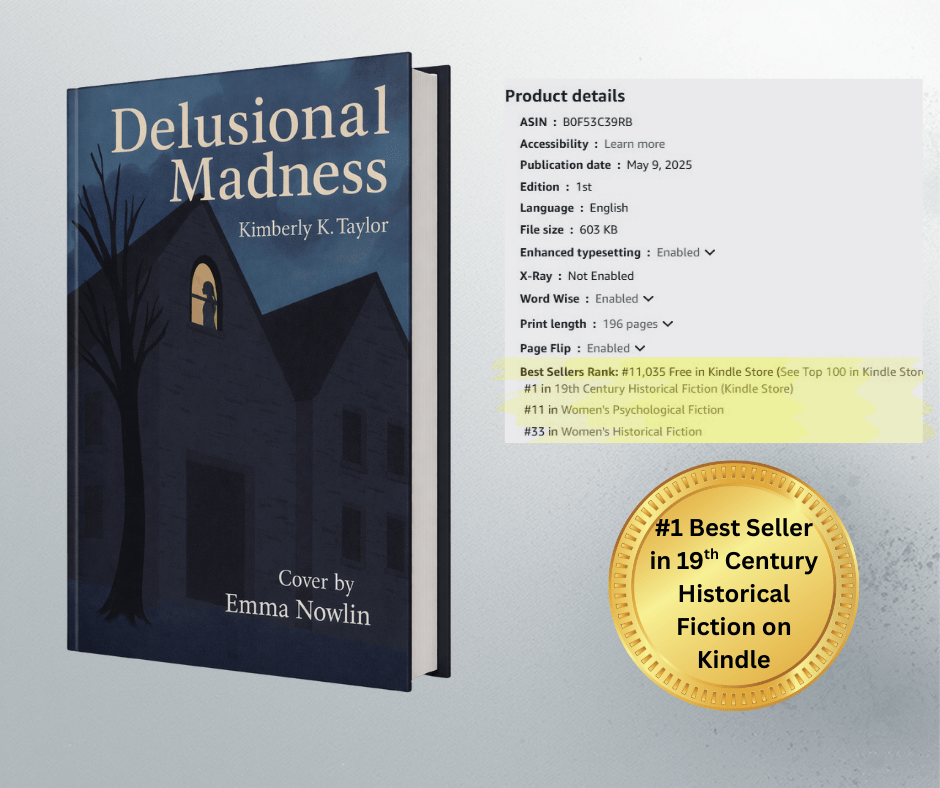
During its recent promotional run, Delusional Madness reached #1 in 19th Century Historical Fiction on Kindle.

This story began as research into the forgotten realities of 19th-century asylums. It became a mission to honor the women whose voices were silenced, dismissed, or misunderstood.

Seeing it resonate with readers was overwhelming in the best way.

Thank you to everyone who downloaded, shared, and supported this novel. This milestone belongs to you as much as it does to me.

With gratitude,
Kimberly

The Quiet Work of Advocacy

Advocacy is often imagined as something loud.

It conjures images of raised voices, public statements, and visible confrontation. And sometimes, advocacy does look like that. But more often — and more powerfully — it happens quietly.

In my work as an educator, advocacy has rarely announced itself. It shows up in the moments when a careless comment needs correcting, even if it would be easier to let it pass. It shows up in the decision to protect a student’s dignity when others are quick to label, dismiss, or joke. It lives in the pauses — the moments when silence is tempting, but not neutral.

The students I advocate for do not always have the space or safety to advocate for themselves. Some communicate differently. Some process the world differently. Some have spent years being misunderstood before they ever walk into a classroom. In those moments, advocacy is not about speaking over them — it is about standing beside them.

What has surprised me most is how small these moments can appear from the outside. A quiet redirection. A firm boundary. A reminder that words carry weight. These are not dramatic gestures, but they are not insignificant ones either. They shape how students see themselves. They shape whether a space feels safe or hostile, humane or dismissive.

Advocacy is also about language — the words we choose and the ones we refuse to normalize. Casual cruelty often hides behind humor, habit, or ignorance. Challenging it does not always require anger. Sometimes it requires clarity. Sometimes it requires patience. And sometimes it requires the courage to be the only person in the room who says, “That’s not okay.”

This kind of work does not seek applause. It rarely leaves evidence behind. But it matters.

I’ve come to believe that quiet advocacy is a form of respect — respect for the individual, for their dignity, and for the truth that everyone deserves to exist in a space where they are not reduced to a label or a punchline.

This blog exists, in part, because of that belief.

Some stories demand to be told carefully. Some voices require protection before they can be heard. And some work — the most important work — happens without recognition at all.

WELCOME to a Writer’s Quiet Place

I have always believed that some stories need quiet in order to be told properly.

Not silence — but space. Space to listen carefully. Space to reflect. Space to acknowledge truths that were once ignored, softened, or deliberately forgotten.

A Writer’s Quiet Place exists because I needed somewhere for those kinds of stories to live.

As a writer, I am drawn to the margins — to lives history documented poorly, if at all. I am drawn to voices that were dismissed, misunderstood, or silenced, particularly in the context of mental health and institutional care. As an educator, I have seen how easily those same patterns repeat themselves in modern spaces — in classrooms, in hallways, in the assumptions people make about ability, worth, and voice.

Advocacy, like storytelling, often happens quietly. It shows up in the moments when someone chooses to intervene rather than ignore, to correct rather than laugh along, to protect rather than stay silent. Those moments matter. They shape lives.

This blog is not meant to persuade or perform. It is meant to reflect.

Here, I will share thoughts on writing and research, on history’s forgotten corners, on mental health and humanity, and on the responsibility we carry — as writers, educators, and readers — to speak carefully and act compassionately. Some entries may connect directly to my novels; others may stand alone as reflections shaped by teaching, listening, and lived experience.

If you’ve found your way here, I hope this space offers something steady — a reminder that stories matter, that advocacy can be quiet and powerful, and that compassion is never misplaced.

Thank you for being here at the beginning.

Say Hello!

Kimberly LOVEs it when readers stop in and say hello! Allow her to say, “Thank You!”

In exchange for taking the time to say hello, you will be entered into a drawing for some really cool prizes, which will be revealed soon! See the details below!

  • This contest will run from Sunday, September 14, 2025, through Sunday, October 12th, 2025.
  • What is required to earn an entry into the drawing and be eligible to win? (you have the opportunity to earn 5 entries) see below for details
    • Visitors will click on the button below labeled, “Say hello to Author Kimberly Taylor”
      • Complete the blank fields, which include:
        • Name 1 entry
        • Email address (she will never SPAM you) 1 entry
        • Favorite genre
        • Have you read any of Kimberly’s books? Yes or No (if yes, what have you read? and if no, do you plan to read any of her work?) 1 entry
        • If you have read, “Delusional Madness”, would you like to read a sequel?
        • What would you like to see Kimberly write next?
        • If you have read any of Kimberly’s work, did you remember to rate and review on Amazon or Goodreads? If not, please visit Kimberly’s Amazon Author page and/or her Goodreads Author page by clicking on the buttons below. 1 entry
        • Would you like to hear about Kimberly’s latest and current works, including any new releases that are coming out soon? 1 entry
OR, Scan this QR code to enter!